Can Europe's New Nature Funding Turn Biodiversity Technology into Practical Tools?
A €230 million Horizon Europe Nature package links biodiversity research to practical monitoring and restoration. Two topics show where technology providers can contribute and what applicants need to prepare.
Can Europe's New Nature Funding Turn Biodiversity Technology into Practical Tools?
The European Commission has announced a €230 million Nature funding package under Horizon Europe, covering ten topics. For technology providers, the opportunity lies in solving specific monitoring and restoration problems with the people who will use the results.
What has changed?
The Commission's announcement on 2 October 2026 brings biodiversity into the programme's horizontal activities. The topics cover PFAS, the effects of clean and digital industries, ecosystem restoration, wildlife trafficking, biodiversity monitoring, One Health and ocean observation.
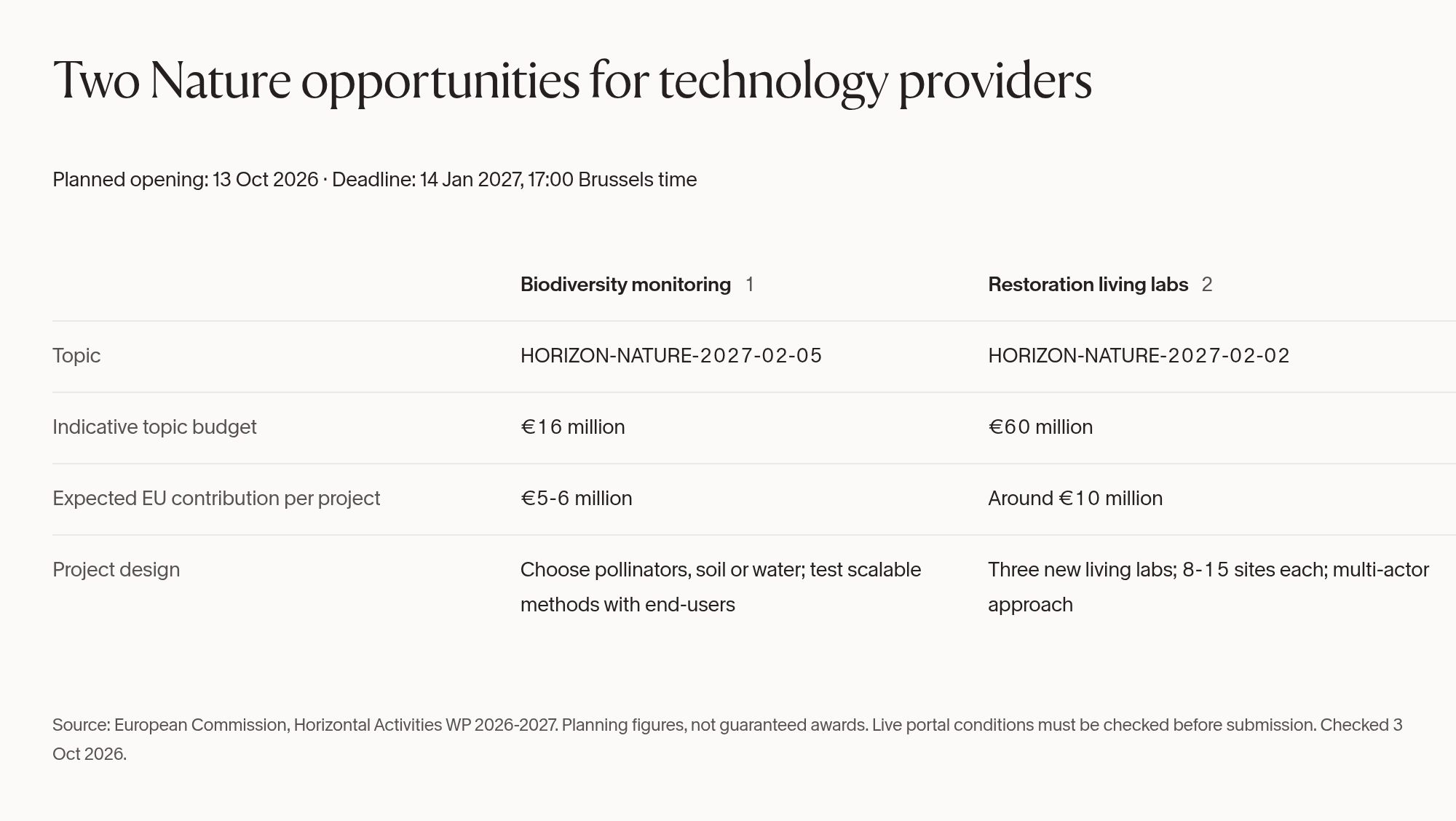
However, the headline does not describe one application window. The official work programme groups the topics into four calls with different schedules. For the monitoring and restoration opportunities examined here, opening is planned for 13 October 2026, with a deadline of 14 January 2027 at 17:00 Brussels time. Applicants should confirm the live portal conditions before submitting.
Where can technology providers contribute?
The clearest example is HORIZON-NATURE-2027-02-05: Cost-effective biodiversity monitoring for EU policies. It has an indicative €16 million topic budget, with expected EU contributions of €5-6 million per project. These are planning figures, not a guaranteed award size or success rate.
The topic asks applicants to select one of three areas:
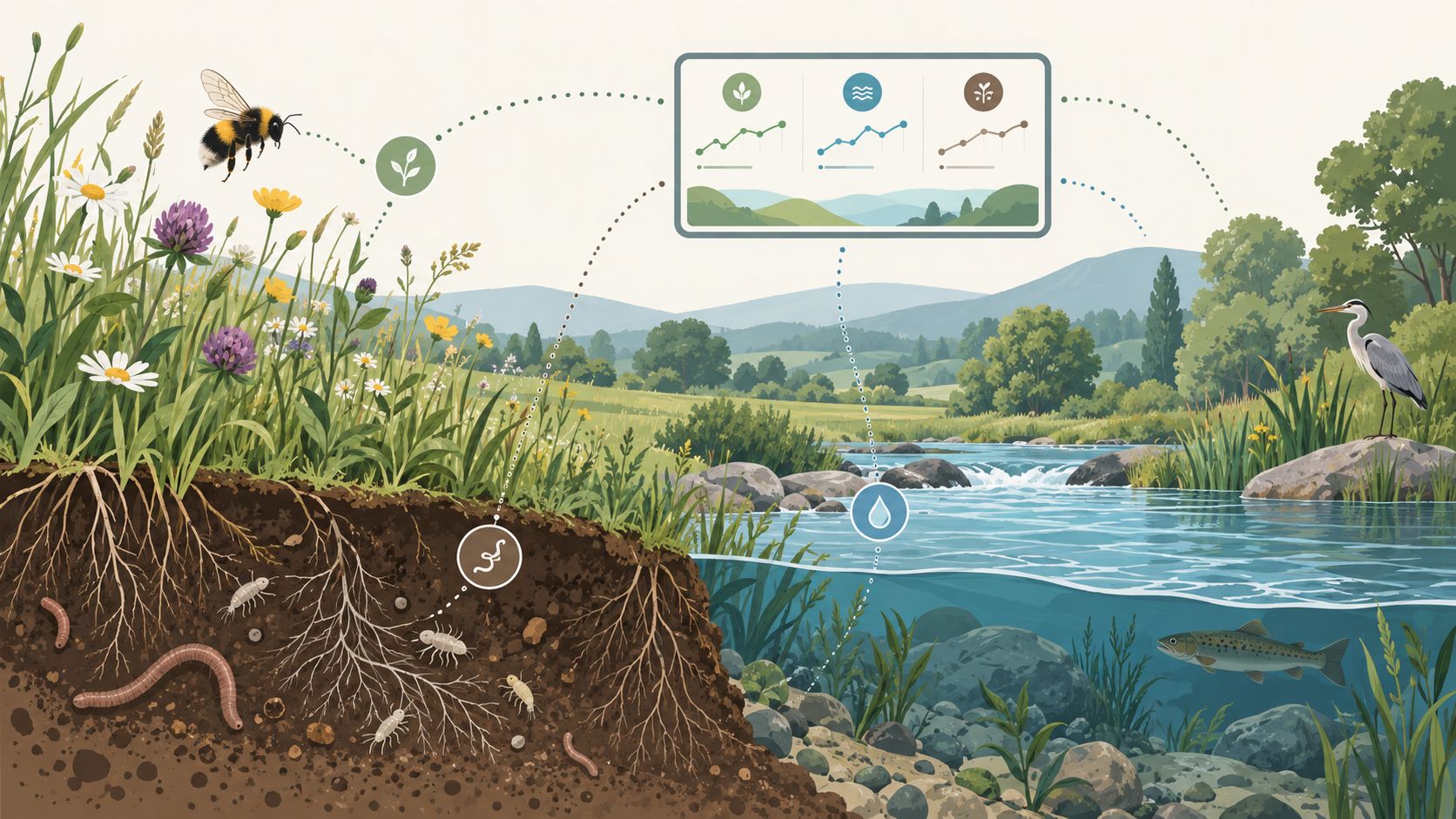
Pollinator monitoring for nature restoration.
Soil biodiversity monitoring.
Biodiversity monitoring under the Water Framework Directive.
It calls for scalable methods, demonstration cases and engagement with end-users. Automated and real-time monitoring supported by AI is envisaged where possible, alongside DNA-based methods and better species reference libraries. A sensor or algorithm alone is therefore not enough: the proposal must show how the combined approach will work within an actual monitoring scheme.
Restoration requires more than a pilot site
A second opportunity, HORIZON-NATURE-2027-02-02, allocates an indicative €60 million to living labs for ecosystem restoration, with an expected contribution of around €10 million per project. Proposals must use a multi-actor approach and establish three new living labs, each with 8-15 experimental sites.
The emphasis is on co-creation, deployment and replication. Researchers, land and water managers, authorities and other stakeholders need to help shape the work. For a company, this means finding a useful role in a shared restoration process rather than adding its product to a consortium after the project has been designed.
Who can participate?
Horizon Europe's general rules allow legal entities, including companies, to participate, subject to funding-country rules and topic conditions. The normal consortium minimum is three independent entities in three different countries: at least one in an EU Member State and two others in Member States or associated countries.
Both topics are Research and Innovation Actions, with a 100% funding rate under the general rules and lump-sum grants under their specific conditions. That does not make every expense or company automatically eligible. Country, consortium and topic requirements still need checking.
What should applicants do next?
Start with the monitoring obligation or restoration bottleneck, identify the end-users and test whether the consortium can deliver usable results. Build on existing methods and projects, and plan interoperable data and collaboration from the outset.
The Commission has announced an online information day on 16 October and a partner brokerage event on 19 October 2026. These are useful next steps for understanding topic expectations and finding partners before committing to a proposal.
Official sources
Commission announcement, 2 October 2026.
Horizontal Activities work programme, call tables and topic conditions.
General Annexes, eligibility and funding rates.
Need help with your funding application?
Our team of experts is ready to help you secure funding for your innovation project.
Contact Us