EIC Pathfinder Challenges 2026: 1.138 proposals compete for €96 million
Record demand puts the funding budget in perspective. Illustrative scenarios suggest capacity for 24–32 projects at an average grant of €3–4 million, while the next call comes with a smaller budget.

The 2026 EIC Pathfinder Challenges call closed on 28 October with 1.138 proposals, a record that the European Innovation Council describes as almost double the 2025 volume. The submissions involve 5,107 participants from 58 countries and compete for an indicative €96 million. Evaluation is under way, with results expected in spring 2027. [1]
AI leads, with healthy ageing close behind
DeepRAP received 450 proposals, biotechnology for healthy ageing 427, and advanced materials for miniaturised energy harvesting systems 261. [1] These correspond to 39.5%, 37.5% and 22.9% of submissions, respectively, after rounding.
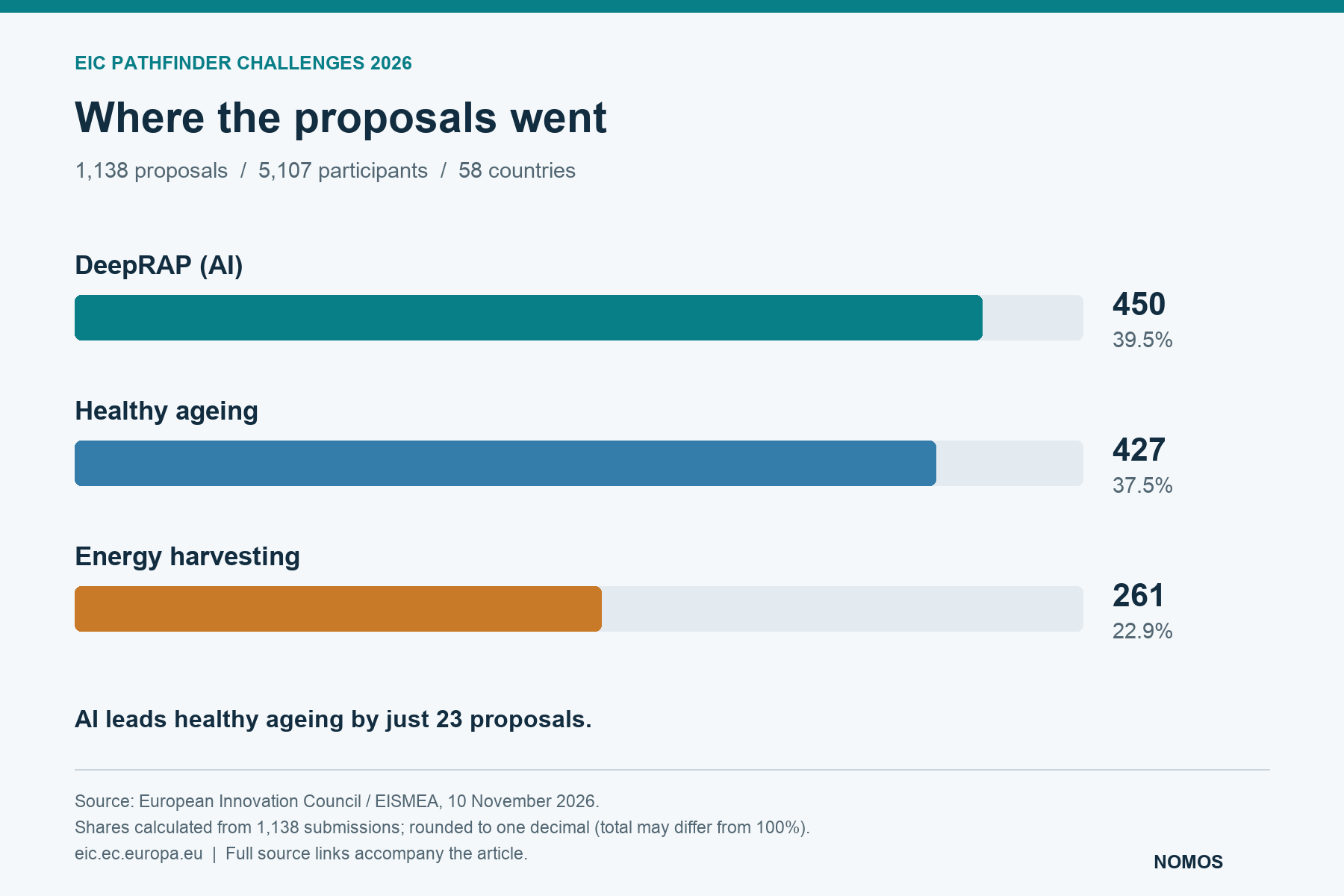
Figure 1. Applications by challenge. Source: EIC/EISMEA, 10 November 2026; percentages calculated from the published counts.
Healthy ageing trails AI by only 23 proposals. That is a useful reminder for applicants: substantial demand extends beyond AI. However, submission counts alone cannot establish the quality of applications, the composition of applicant teams or wider investment trends.
The maths of funding: scenarios, not success-rate forecasts
The EIC expects the budget to be shared approximately equally across the three challenges, equivalent to around €32 million each. [1] The 2026 Work Programme considers EU contributions of up to €4 million appropriate, while allowing higher requests where duly justified or otherwise specified by a challenge. This is neither a mandatory grant size nor a confirmed average. [2]
Assuming an average grant of €3–4 million, the €96 million budget has illustrative capacity for approximately 24–32 projects. Relative to 1.138 submissions, that represents 2.1–2.8%. A lower average grant would support more projects, as the scenarios below show.
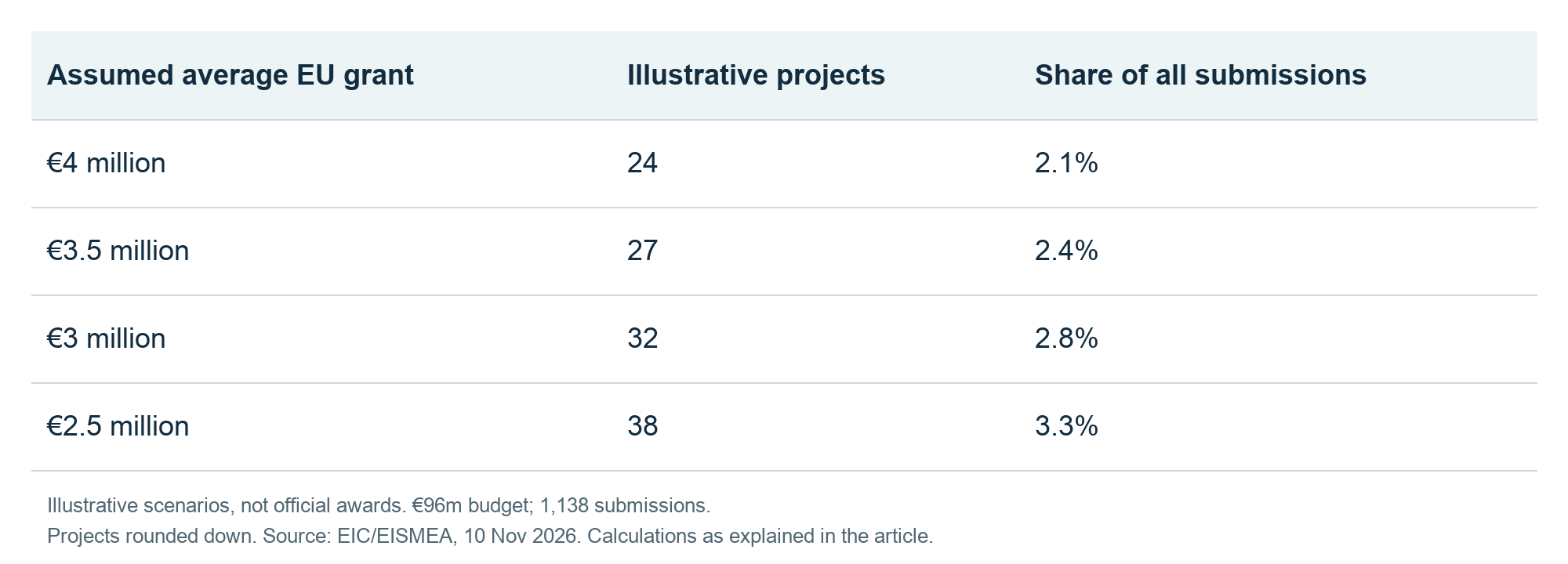
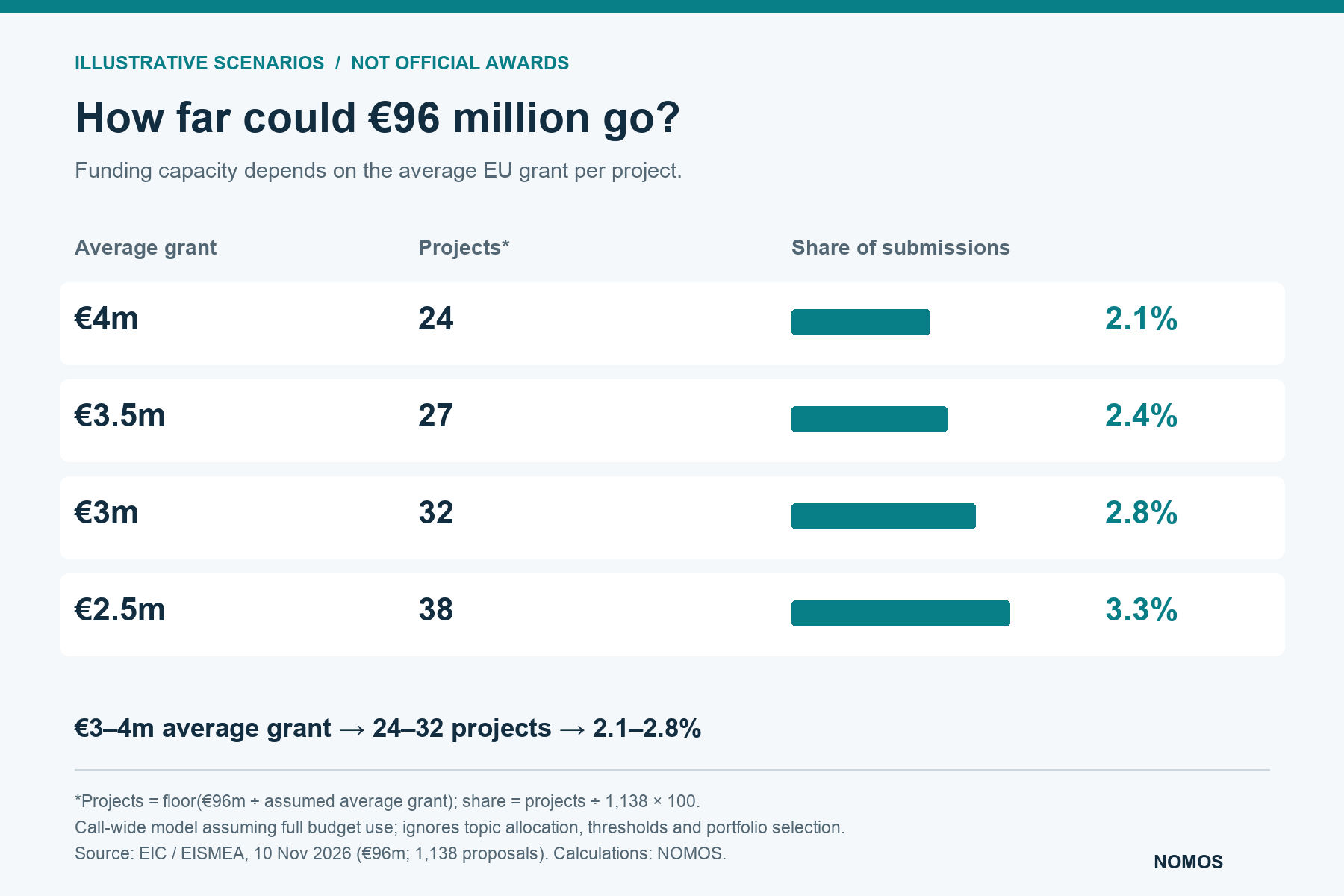
Figure 2. Illustrative budget scenarios, not official award forecasts. Project counts are rounded down; percentages use those whole-project counts.
These are call-wide calculations assuming the full indicative budget is used. They do not model allocations between challenges, actual project budgets, evaluation thresholds or portfolio selection. The EIC selects a coherent portfolio against each challenge’s objectives, rather than simply funding a fixed number of applications. [2] The figures therefore describe budget pressure; they do not predict an individual proposal’s chance of success.
What the increase tells us—and what it does not
The record volume signals strong demand for this call. It does not explain why applications increased. Greater awareness of Pathfinder and the appeal of the selected topics are plausible explanations, but the published submission data do not test them. Nor does a larger applicant pool, by itself, demonstrate that every additional application is competitive.
For future applicants, the practical response is to test project fit early: identify the scientific breakthrough, the evidence needed to demonstrate it and the capabilities required to deliver it.
Three priorities for applicant teams
Read the specific challenge closely. Map the project to its objectives and expected outcomes, and consider how it could contribute to the wider portfolio. Broad thematic relevance is only the starting point.
Start early, aim for TRL 3–4. Pathfinder supports research beginning at low technology readiness levels and working towards proof of concept or laboratory validation. TRL 3 is not a general entry requirement. [3]
Choose the right applicant structure. Challenges can accommodate eligible single applicants, two-entity consortia and larger consortia, subject to the relevant conditions. Build the team around the research needs and check the applicable eligibility rules. [2]
Looking ahead: €82 million and a September 2027 deadline
The EIC has published an indicative €82 million budget for Pathfinder Challenges 2027, compared with €96 million in 2026—a decrease of €14 million, or approximately 14.6%. [4] The announced submission deadline is 29 September 2027. [3]
The three 2027 topics are advanced materials for electricity generation, storage and transmission; safe and controlled continual learning for reliable AI agents (CLOWAI); and quantum energetics. [4] These differ from the 2026 topics, so this year’s submission pattern cannot be carried forward as a forecast of next year’s demand.
A smaller budget makes early positioning particularly valuable. Before investing in a full application, teams should establish whether the proposed breakthrough fits the new challenge, whether the research plan can produce convincing evidence and whether the applicant structure meets the call conditions.
Sources
EIC/EISMEA: 2026 Pathfinder Challenges submission figures, 10 November 2026.
EIC Work Programme 2026, Section II.2, including funding, eligibility and portfolio evaluation provisions.
EIC Pathfinder: research maturity, applicant guidance and announced 2027 deadline.
EIC Pathfinder Challenges 2027: indicative budget and challenge topics.
Related: EIC Accelerator 2026
Need help with your funding application?
Our team of experts is ready to help you secure funding for your innovation project.
Contact Us